info@axiacare.com.au
 (+61) 0000-00-0000



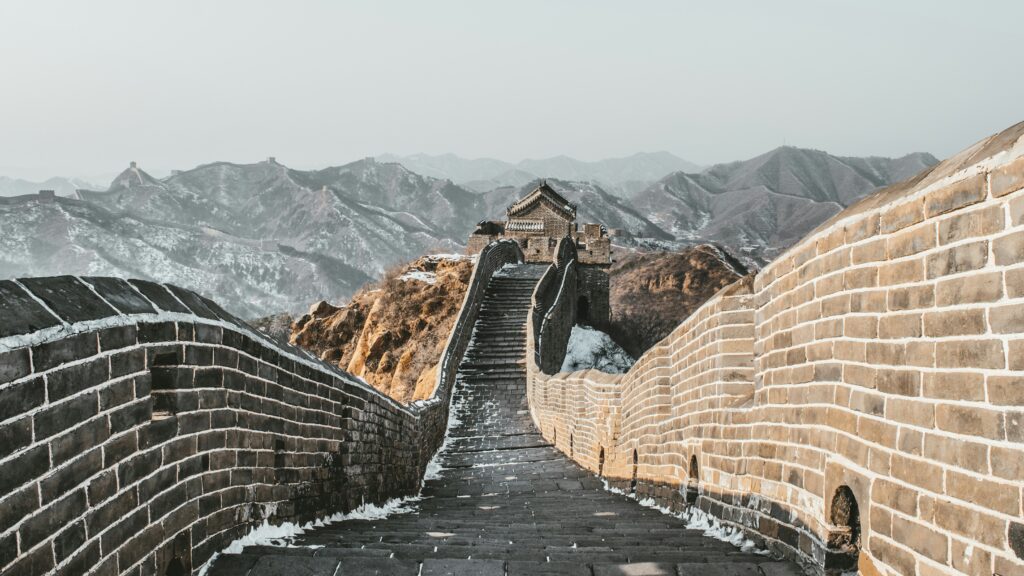
Great Wall of China
The Great Wall is a testament to the will, determination, and architectural genius of the Chinese people. The Great Wall totals more than 13,000 miles in length and is a series of walls and fortifications which were built to prevent the barbarians from entering into their territory. Originally conceived by Emperor Qin Shi Huang in the third century B.C., the best-known and preserved section of the Great Wall was built in the 14th through 17th centuries A.D., during the Ming dynasty.
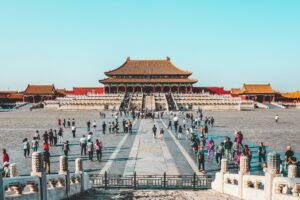
Beijing is the been the political center of the country for most of the past eight centuries2. It was one of the world’s largest cities by population for much of the second millennium CE2. The city’s rich history is palpable in its ancient alleyways, majestic palaces, and serene temples, providing travelers with a profound sense of China’s heritage and evolution3.
Xi’an served as the imperial capital for ten ancient imperial dynasties and several regional kingdoms4. The city has a great number of precious relics and historical sites, some dating back to its times as capital4. More than 4,000 historical sites and tombs have been excavated4.
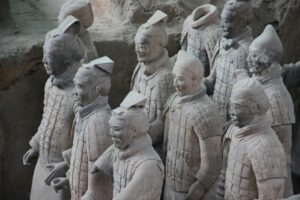
The Terracotta Warriors are an important part of the mausoleum of the first emperor in Chinese history5. They reflect the power and resources of the Qin Empire during that period6. Today, the Terracotta Warriors stand as a testament to the historical and cultural significance of the Qin Dynasty7.
Chengdu became famous for its fine brocades and satins8. The city was also notable for its refined culture and display of luxury8. Throughout history, it has remained a great city and a major administrative center, and it has been the capital of Sichuan since 13688.
Shanghai was one of the first Chinese ports to be opened to Western trade, and it long dominated the nation’s commerce9. Since the communist victory in 1949, however, it has become an industrial giant whose products supply China’s growing domestic demands9. Beginning in the late 20th century, Shanghai transformed itself into China’s most-advanced city and became the center of the country’s economic life10.