info@axiacare.com.au
 (+61) 0000-00-0000



Exploring Russia: The Kremlin and St. Basil’s Cathedral
Introduction
Russia, the largest country in the world, is a land of rich history, diverse culture, and stunning architecture. Among its many treasures, the Kremlin and St. Basil’s Cathedral in Moscow stand out as iconic symbols of the nation’s heritage. This article delves into the fascinating history and significance of these landmarks, offering a glimpse into Russia’s past and present.
The Kremlin: Heart of Russian Power
!The Kremlin
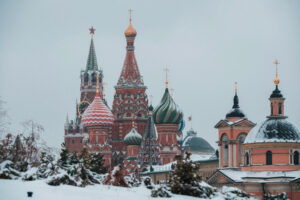
The Kremlin, a fortified complex in the heart of Moscow, has been the seat of Russian power for centuries. Its name, derived from the Russian word “kreml,” meaning fortress, aptly describes its imposing presence. The Kremlin’s history dates back to the 12th century when it was first constructed as a wooden fort. Over the centuries, it has undergone numerous transformations, evolving into the grand architectural ensemble we see today.
Historical Significance
The Kremlin has played a pivotal role in Russian history. It served as the residence of the Tsars, the headquarters of the Soviet government, and now, the official residence of the President of Russia. The complex houses several important buildings, including the Grand Kremlin Palace, the Armory Chamber, and the Cathedral of the Annunciation. Each of these structures holds its own unique historical and cultural significance.
Architectural Marvels
The Kremlin’s architecture is a blend of various styles, reflecting the different periods of its construction. The Grand Kremlin Palace, with its opulent halls and chambers, showcases the grandeur of Russian imperial architecture. The Armory Chamber, on the other hand, is a treasure trove of Russian artifacts, including royal regalia, weapons, and jewelry. The Cathedral of the Annunciation, with its golden domes and intricate frescoes, is a testament to the rich tradition of Russian Orthodox architecture.
St. Basil’s Cathedral: A Symbol of Russia
!St. Basil’s Cathedral
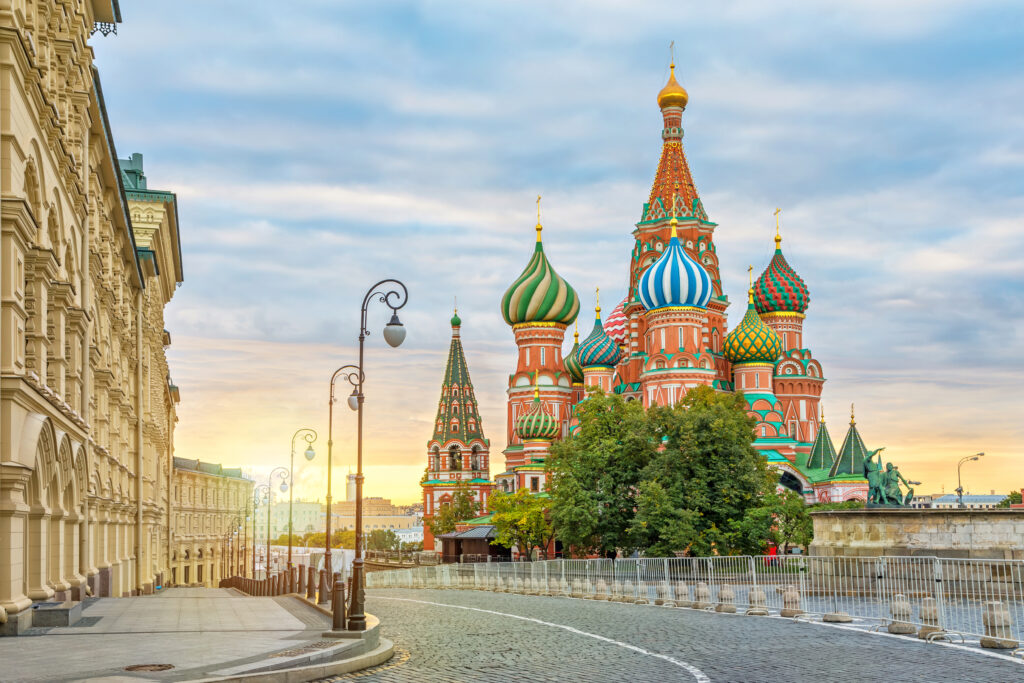
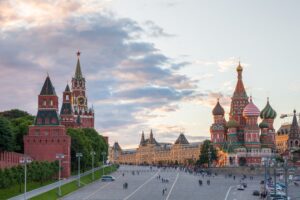
St. Basil’s Cathedral, officially known as the Cathedral of the Intercession of the Most Holy Theotokos on the Moat, is one of the most recognizable landmarks in Russia. Located on Red Square, this stunning structure is a masterpiece of Russian architecture and a symbol of the country’s cultural heritage.
Historical Background
Commissioned by Ivan the Terrible in the mid-16th century, St. Basil’s Cathedral was built to commemorate the capture of Kazan and Astrakhan. Its construction began in 1555 and was completed in 1561. The cathedral’s unique design, featuring nine individual chapels arranged around a central nave, is said to represent the flames of a bonfire rising into the sky1.
Architectural Splendor
St. Basil’s Cathedral is renowned for its vibrant colors, intricate patterns, and distinctive onion-shaped domes. Each of the nine chapels is topped with a unique dome, creating a visually stunning ensemble. The cathedral’s interior is equally impressive, with its labyrinthine layout, richly decorated walls, and beautiful icons. The central chapel, dedicated to the Intercession of the Most Holy Theotokos, is the largest and most ornate of the nine.
Cultural Significance
Over the centuries, St. Basil’s Cathedral has become a symbol of Russia’s national identity. It has witnessed numerous historical events, from coronations and military parades to political rallies and public celebrations. Despite its turbulent history, including periods of neglect and restoration, the cathedral has remained a beloved landmark and a testament to the resilience of Russian culture.
The Kremlin and St. Basil’s Cathedral Today
!Red Square
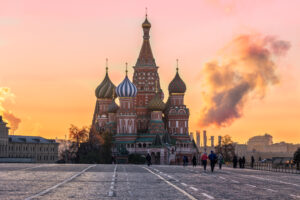
Today, the Kremlin and St. Basil’s Cathedral continue to attract millions of visitors from around the world. The Kremlin, with its museums, palaces, and cathedrals, offers a fascinating glimpse into Russia’s past and present. Visitors can explore the opulent halls of the Grand Kremlin Palace, marvel at the treasures in the Armory Chamber, and attend services at the Cathedral of the Annunciation.
St. Basil’s Cathedral, now a museum, remains a must-see attraction for anyone visiting Moscow. Its vibrant colors and unique architecture make it a favorite subject for photographers and artists. Inside, visitors can wander through the maze of chapels, admire the intricate frescoes, and learn about the cathedral’s rich history.
Conclusion
The Kremlin and St. Basil’s Cathedral are more than just architectural marvels; they are symbols of Russia’s enduring spirit and cultural heritage. Their rich history, stunning architecture, and cultural significance make them essential stops for anyone exploring the heart of Russia. Whether you’re a history buff, an architecture enthusiast, or simply a curious traveler, these iconic landmarks offer a captivating journey through the centuries.
I hope this article meets your needs! If you need any more details or further assistance, feel free to ask.