info@axiacare.com.au
 (+61) 0000-00-0000



The Founding of Ayutthaya
Ayutthaya was founded in 1350 by King Ramathibodi to escape a smallpox outbreak in Lopbur. The city’s name, Ayutthaya, is derived from Ayodhya in northern India, the legendary city of the hero Rama from the Hindu epic Ramayana.
For over 400 years, Ayutthaya was the capital of the Kingdom of Siam (modern-day Thailand). It was a period marked by prosperity and cultural enlightenment. At its peak, Ayutthaya was one of the largest and wealthiest cities in the world, and attracted traders from Europe, China, and India.
Cultural and Historical Significance
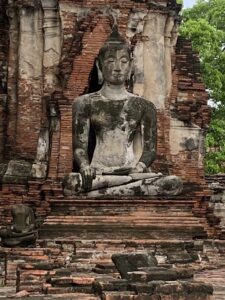
Ayutthaya was a political and economic center as well as a cultural and religious monument. The city’s architecture, art, and literature was heavily influenced by Buddhism. The ruins of Ayutthaya are a testament to its former glory and has been designated a UNESCO World Heritage site.
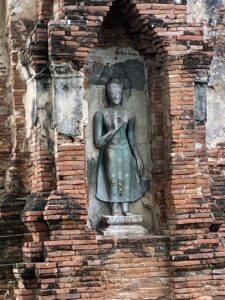
Major Landmarks
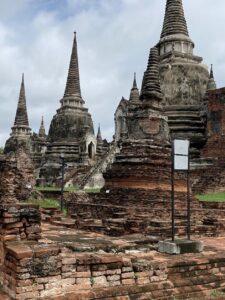
Ayutthaya is home to numerous historical landmarks that reflect its rich heritage:
- Wat Phra Si Sanphet: This temple was the holiest in Ayutthaya and served as the royal chapel. Its three large chedis are iconic symbols of the city
- Wat Chaiwatthanaram: Built in the traditional Khmer style, this temple complex is one of the most visited sites in Ayutthaya Historical Park
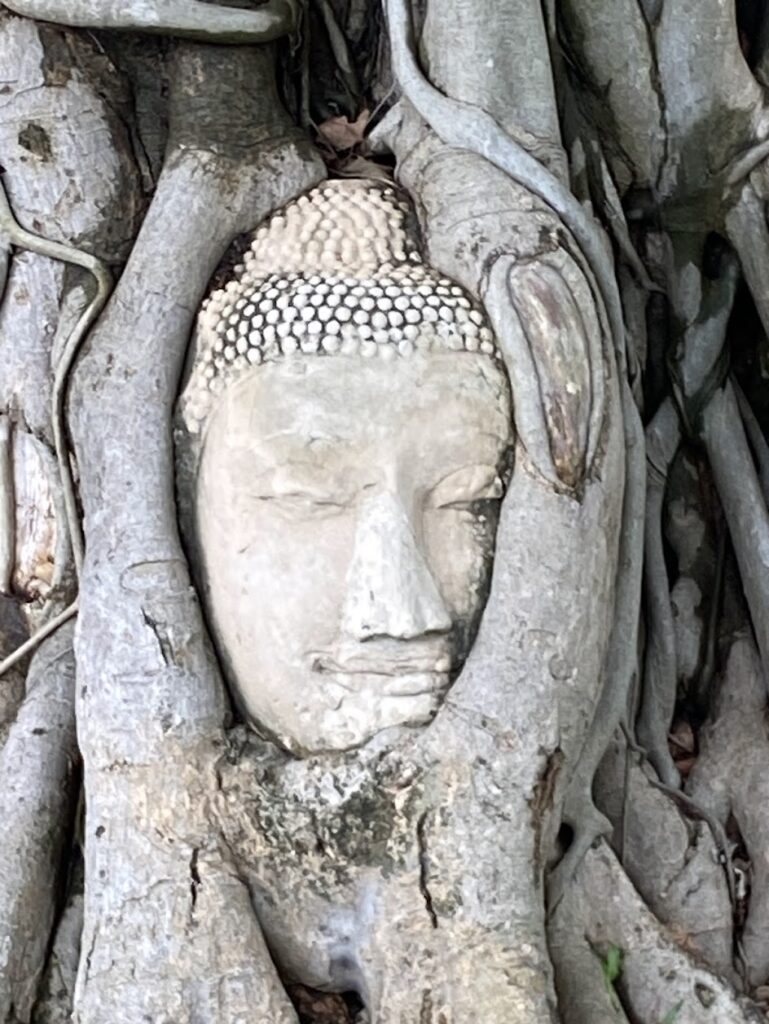
- Wat Mahathat: Famous for the Buddha head entwined in tree roots, this temple is a must-see for visitors
- Bang Pa-In Palace: Also known as the Summer Palace, this beautiful complex showcases a mix of Thai, Chinese, and European architectural styles.
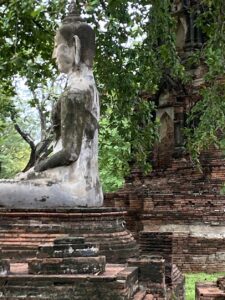
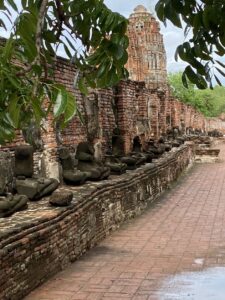
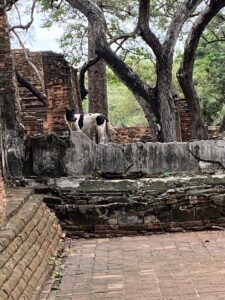
Ayutthaya’s story is one of resilience and cultural richness.
Despite being sacked by the Burmese in 1767, the spirit of Ayutthaya lives on through its ruins and the enduring influence it has on Thai culture.