info@axiacare.com.au
 (+61) 0000-00-0000



The Hagia Sophia: A Journey Through History, Beauty, and Culture
The Hagia Sophia, located in Istanbul, Turkey, is one of the most iconic and historically significant buildings in the world. Originally built as a Christian cathedral, it has served various roles over the centuries, including a mosque and a museum. Today, it stands as a symbol of the rich cultural and religious history of the region.
A Glimpse into History
The Hagia Sophia, also known as Ayasofya in Turkish, was commissioned by the Byzantine Emperor Justinian I and completed in 537 AD. It was constructed on the site of two earlier churches, both of which were destroyed during riots. The architects, Anthemius of Tralles and Isidorus of Miletus, were tasked with creating a structure that would surpass all others in grandeur and beauty.
For nearly a thousand years, the Hagia Sophia served as the primary church of the Byzantine Empire and the seat of the Patriarch of Constantinople. It was the largest cathedral in the world until the completion of the Seville Cathedral in 1520. In 1453, when the Ottoman Turks conquered Constantinople, the Hagia Sophia was converted into a mosque by Sultan Mehmed II. It remained a mosque until 1935, when it was secularized and turned into a museum by the Republic of Turkey. In 2020, it was reconverted into a mosque.
Architectural Marvel
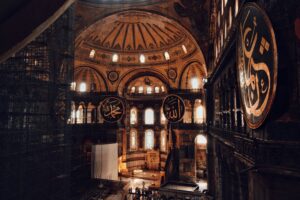
The Hagia Sophia is renowned for its massive dome, which was an engineering marvel of its time. The dome, which measures about 31 meters in diameter, appears to float above the central nave, creating a sense of awe and wonder. This effect is achieved through the use of pendentives, which are triangular sections of vaulting that allow the circular dome to be placed over a square base.
The exterior of the Hagia Sophia is characterized by its large, imposing structure and the four minarets that were added during the Ottoman period. These minarets not only serve as visual markers but also as functional elements for the call to prayer.
Inside, the Hagia Sophia is a treasure trove of art and architecture. The vast interior is adorned with mosaics, many of which date back to the Byzantine era. These mosaics depict various religious scenes, including images of Christ, the Virgin Mary, and numerous saints. The most famous of these is the Deesis mosaic, which shows Christ flanked by the Virgin Mary and John the Baptist.
Beauty Beyond Compare
The beauty of the Hagia Sophia lies not only in its grand architecture but also in the intricate details that adorn its interior. The walls and ceilings are covered with stunning mosaics made from tiny pieces of colored glass, stone, and gold. These mosaics create intricate patterns and images that reflect the light in a way that makes the entire space glow.
The marble used in the construction of the Hagia Sophia was sourced from various parts of the Byzantine Empire, including Egypt, Syria, and Greece. This variety of marble adds to the visual richness of the interior, with different colors and patterns creating a sense of depth and texture.
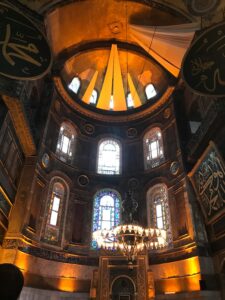
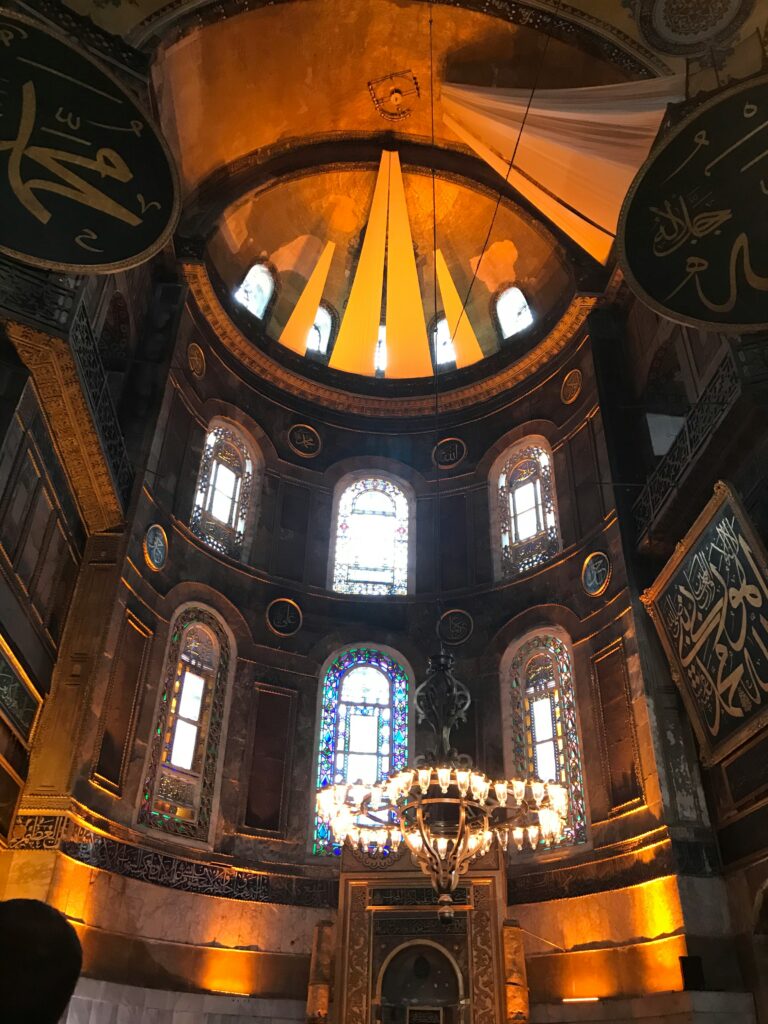
The central nave is dominated by the massive dome, which is supported by four large piers. The dome itself is covered with gold mosaics that depict various religious scenes. The windows at the base of the dome allow natural light to flood into the interior, creating a heavenly atmosphere.
Religious Significance
The Hagia Sophia has played a significant role in the religious history of both Christianity and Islam. As a cathedral, it was the center of Orthodox Christianity and the site of many important religious ceremonies, including the coronation of Byzantine emperors. The church was dedicated to the Holy Wisdom, or Hagia Sophia in Greek, which is a reference to Christ as the embodiment of divine wisdom.
When the Ottomans converted the Hagia Sophia into a mosque, they added Islamic elements to the interior, including mihrabs (prayer niches), minbars (pulpits), and calligraphic panels bearing the names of Allah, the Prophet Muhammad, and the first four caliphs. Despite these changes, many of the original Christian mosaics were preserved, creating a unique blend of Christian and Islamic art and architecture.
Today, the Hagia Sophia continues to be a place of worship for Muslims, while also attracting millions of visitors from around the world who come to marvel at its beauty and historical significance. It stands as a testament to the rich and diverse cultural heritage of Istanbul and serves as a symbol of the city’s enduring legacy.
The Hagia Sophia is more than just a mosque; it is a symbol of the rich and complex history of Istanbul. Its architectural brilliance, stunning beauty, and religious significance make it a must-visit destination for anyone interested in history, art, and culture. Whether you are admiring the grandeur of its dome, the intricate details of its mosaics, or the blend of Christian and Islamic elements, the Hagia Sophia offers a glimpse into the past and a reminder of the enduring power of human creativity and faith.