info@axiacare.com.au
 (+61) 0000-00-0000



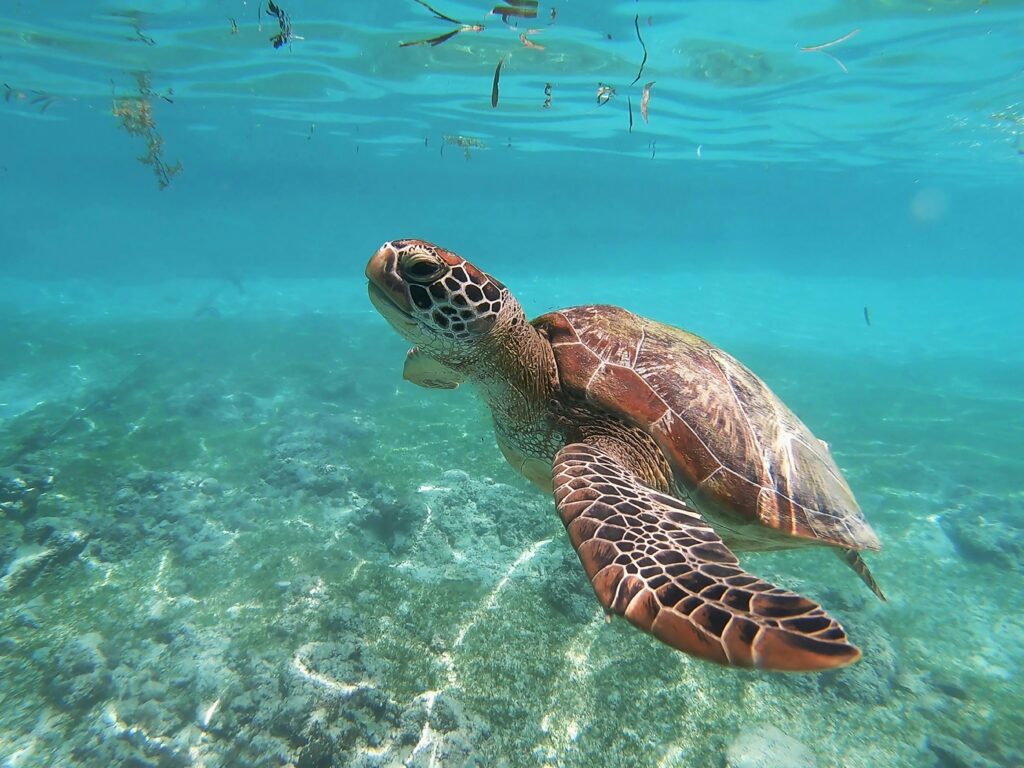
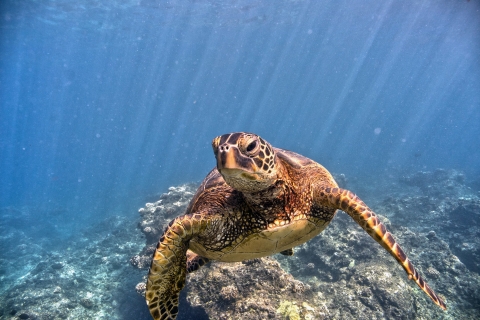
Photo credit John Burns/NOAA
In lava’s embrace, Honu basks, Sun-kissed wisdom etched in scales.
Ancestral spirit, guardian of tides, Linking land, sea, and timeless tales.
–Author unknown
The Hawaiian Green Sea Turtle is known in Hawaiian culture as ‘Honu’ and can be seen year-round along Hawaii’s coasts. One can see them on Punalu’lu Beach on the Big Island of Hawaii basking in the sun peacefully. These Honu migrate thousands of miles from nesting grounds to lay their eggs on the beach. During the day, you can see them swimming in shallow waters close to shore. At night, they float offshore while searching for food.
Mythology
Honu have a mystical aura and are a symbol of Hawaiian culture representing strength, resilience, and good luck. Their presence in the ocean is believed to bring blessings and luck as they are carriers of Mana (spiritual energy).
In ancient Hawaiian mythology, sea turtles were revered as symbols of strength and bravery and thought to protect both land and sea gods. They were believed to be a connection between humans, the land (aaina), and the ocean.
Hawaiian Honu are ancestral spirits and several legends reflect their mystical aura. One legend has that Kailua, a giant sea turtle goddess inhabited the Punalu’u Bay on the Big Island of Hawaii. She would transform herself into a girl and watch over the young children at play on the shoreline. She was revered as a protector of the Keiki (children) and would keep a watchful eye over them.
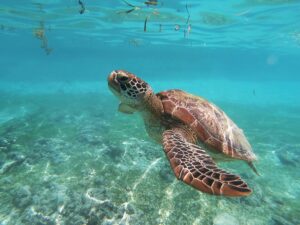
Unfortunately, the Honu were hunted for their meat, and in the 1970s, their population dwindled to a mere 67 turtles. However, with state and federal legal protection and the cessation of hunting, the Hawaiian Sea turtle population has increased significantly and is making a comeback. However, even though they are making a come-back, they’re still vulnerable to boating accidents, climate-induced impacts, bycatch in shore-based fisheries, disease, boat strikes, coastal development, and pollution.
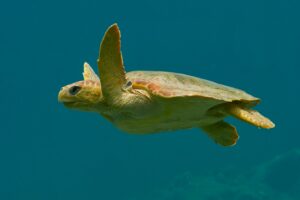
View Honu from a distance of no less than 10 feet (3 meters) to avoid disrupting their behavior.
Never feed them directly or indirectly.
Prevent vessel collisions by driving slowly near harbors and shallow reef habitats.
Participate in beach clean-ups to reduce marine debris
Don’t attempt to touch them
Keep quiet when around them to avoid stressing them
Be the Protectors of These Ancient Guardians
Mahalo Nui Loa!
Learn more About Hawaii:
Manta Rays: The Ocean’s Most Elegant Creatures
Black Sand Beach: Turtles, Lava, and Ocean Breezes
Hawaiian Orchids for a Fresh, Elegant Look in Your Home