info@axiacare.com.au
 (+61) 0000-00-0000



My trip to Morocco was an unexpected one. I was originally scheduled to go to Greece, but was begrudgingly forced to cancel last minute. I decided at the last minute on a whim to go to Morocco instead. Admittedly, for some reason, I wasn’t all that excited about it, as I was ruminating on my missed Greece opportunity. But once I stepped off the plane, my eyes and mind were awakened by the almost overwhelming landscape. It was my first time in Africa, and as an American, my trip to Morocco presented me with so many new, eye-opening experiences, from the Fez Medina to Marrakesh, the sights, sounds, tastes, and flavors will remain in my mind forever.
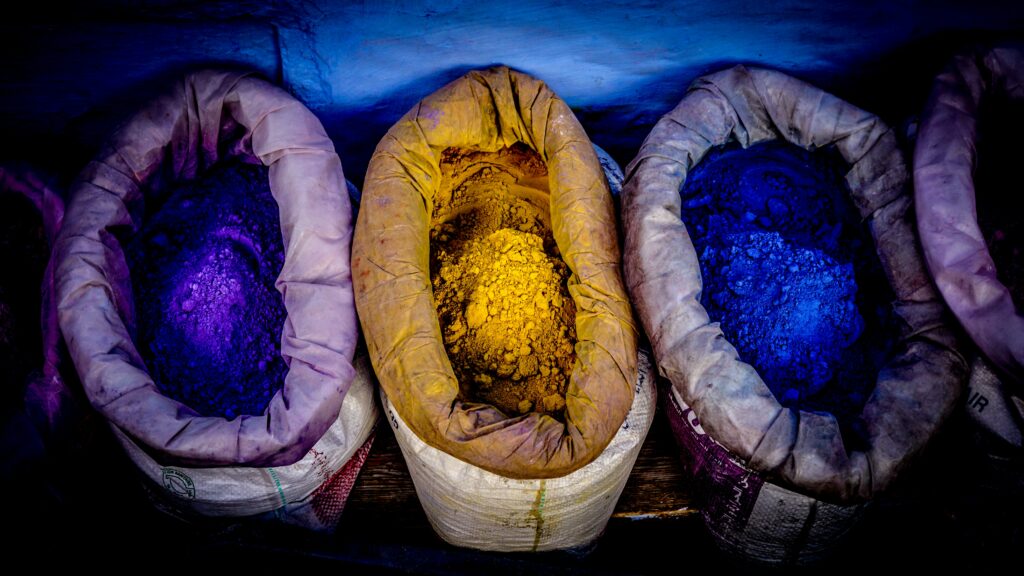
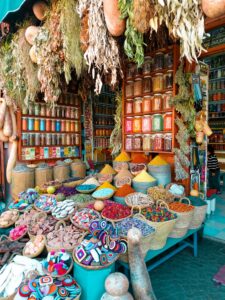
One thing that I will never forget is the food. Moroccan food itself is amazing with its spicy and tasty flavors, the complex fusion of spices, meats, fruit, and herbs in the Moroccan dishes is a culinary delight to behold! I remember strolling through the bustling, night market in Marrakesh and seeing the vibrant colors of their spice displays, and smelling the intense aromas. The vendors had brilliant displays of a rainbow of colors of spices and herbs, and everything from tagines to spices, and pastries.
Culinary History
Moroccan cuisine is a fusion of cooking techniques, a blend of Berber, Andalusi, Mediterranean, and Arab cuisines that can be traced back to the 7th century BC. The unique flavor of the dishes has been shaped by centuries of international and intercultural exchange and is distinctly and uniquely Moroccan. The flavorful dishes have won international awards for being some of the best cuisine in the world – and rightfully so!
Regional Cuisine
Moroccan cuisine consists of a variety of Mediterranean fruits and vegetables, as well as tropical products like snails. Beef, goat, mutton, and lamb, are the most common types of meat used in cooking, as well as chicken and seafood, serve as a base for the cuisine. Unique flavorings such as lemon pickle, argan oil, preserved butter (smen), olive oil, and dried fruits, as well as robust spices, are used throughout.
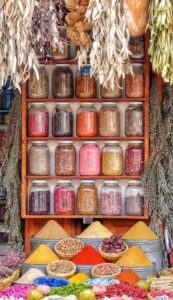
Ras El Hanout is a robust, complex spice that is used extensively in Moroccan cuisine and whose literal translation means “top shelf,” meaning it’s a top-of-the-line product or the best. Its characteristic blend gives an intense flavor that’s unique to Moroccan cooking.
Other Common spices include cinnamon, cumin, turmeric, ginger, paprika, coriander, saffron, mace, cloves, fennel, anise, nutmeg, cayenne pepper, fenugreek, caraway, black pepper, and sesame seeds.
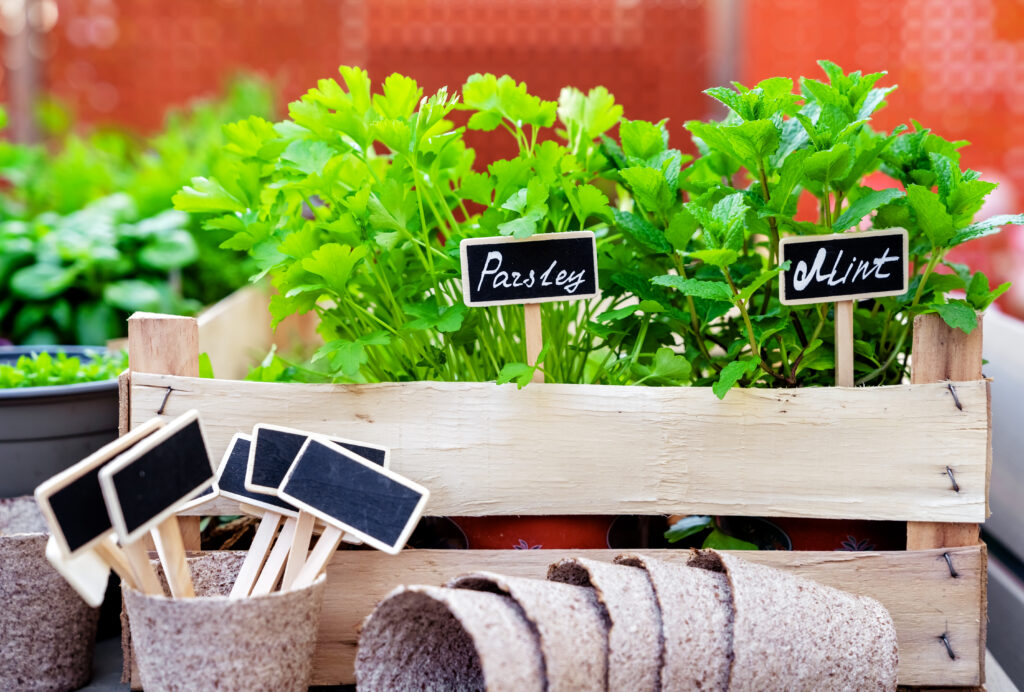
Moroccan cuisine commonly includes incorporating aromatic herbs such as mint, parsley, coriander, oregano, peppermint, marjoram, verbena, sage, and bay laurel1.
Moroccan cuisine is divided into five regional types: the North, the South, the East, the West, and Central Morocco. Each region has its own unique culinary traditions and specialties. For example, Northern Morocco is famous for its seafood dishes, while Southern Morocco specializes in its tagines and couscous dishes.
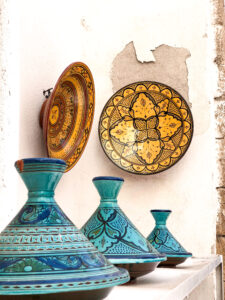
Moroccan cuisine is a unique and unforgettable experience characterized by its bold flavors, rich spices, and aromatic herbs.
The cuisine is a reflection of the fusion of intercultural cooking techniques and ingredients that are sure to delight the palate!